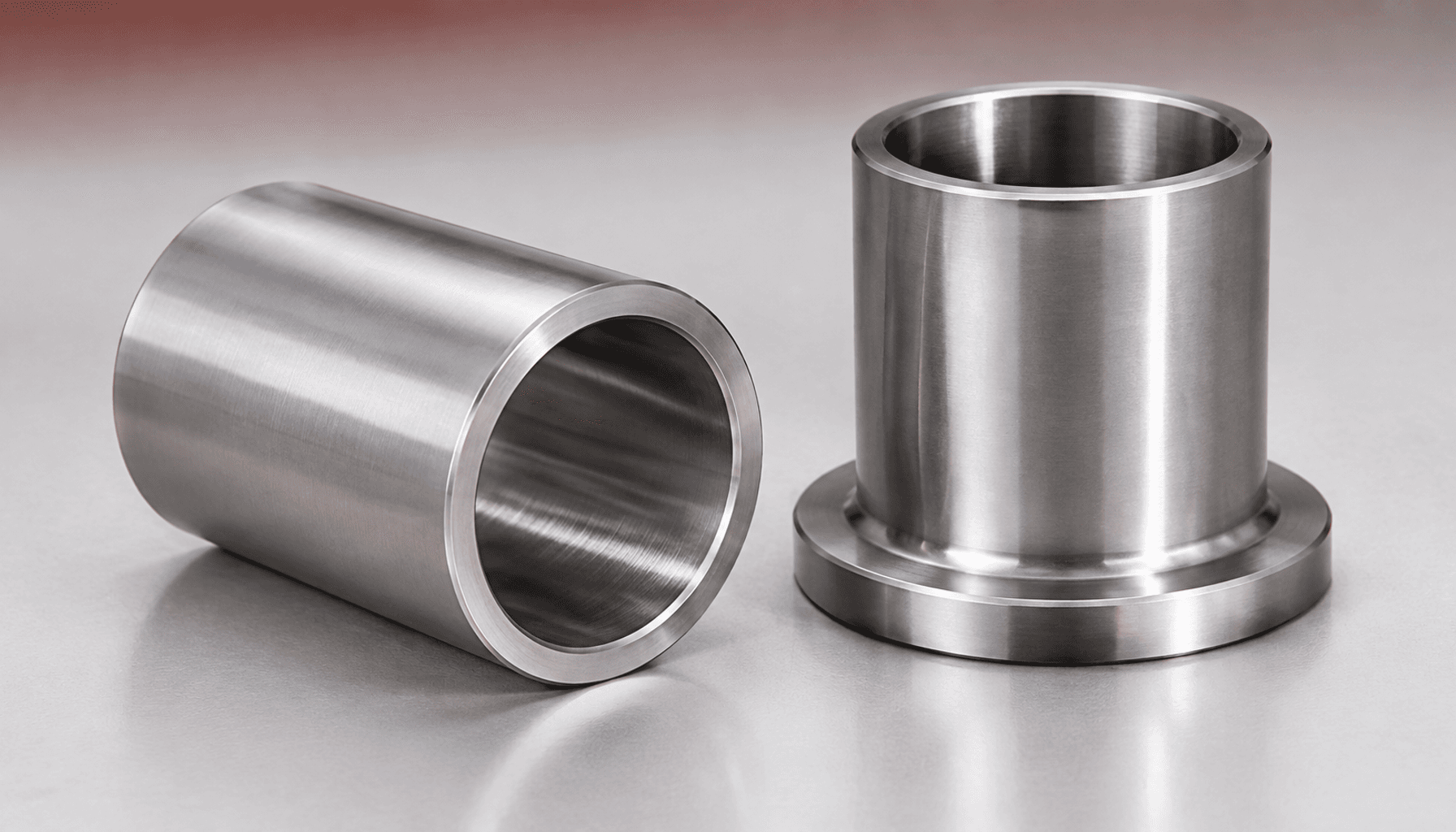
Tungsten Carbide Sleeves: Grades, Fits, and Wear
A drawing-based guide to specifying carbide wear sleeves, covering binder selection, bore and outside-diameter fits, coaxiality, surface finish, thermal…
Table of Contents
- Tungsten Carbide Sleeves: Selecting for the Assembly
- Comparison Table: Grade Choices for Abrasion and Impact
- WC Grain Size, Binder Content, and Hardness
- Fluid Chemistry and Corrosion Considerations
- Specify Fits and Geometry Before Setting Tolerances
- Bore, Outside Diameter, Coaxiality, and Surface Finish
- Wall Thickness, Edge Condition, and Thermal Fit Changes
- Five Steps from Assembly Drawing to Sleeve RFQ
- Specification Summary and Inspection Requirements
- Buyer FAQ: Grades, Tolerances, Trial Orders, and Shipping
- Request a Quote for Custom Tungsten & Carbide Parts
Tungsten carbide sleeves protect pump, valve, and shaft assemblies against abrasive wear when the carbide grade, mating fits, and operating conditions are specified together. Select the material for abrasion, impact, and fluid chemistry, then check geometry and assembly stresses across the operating temperature range.
Tungsten Carbide Sleeves: Selecting for the Assembly
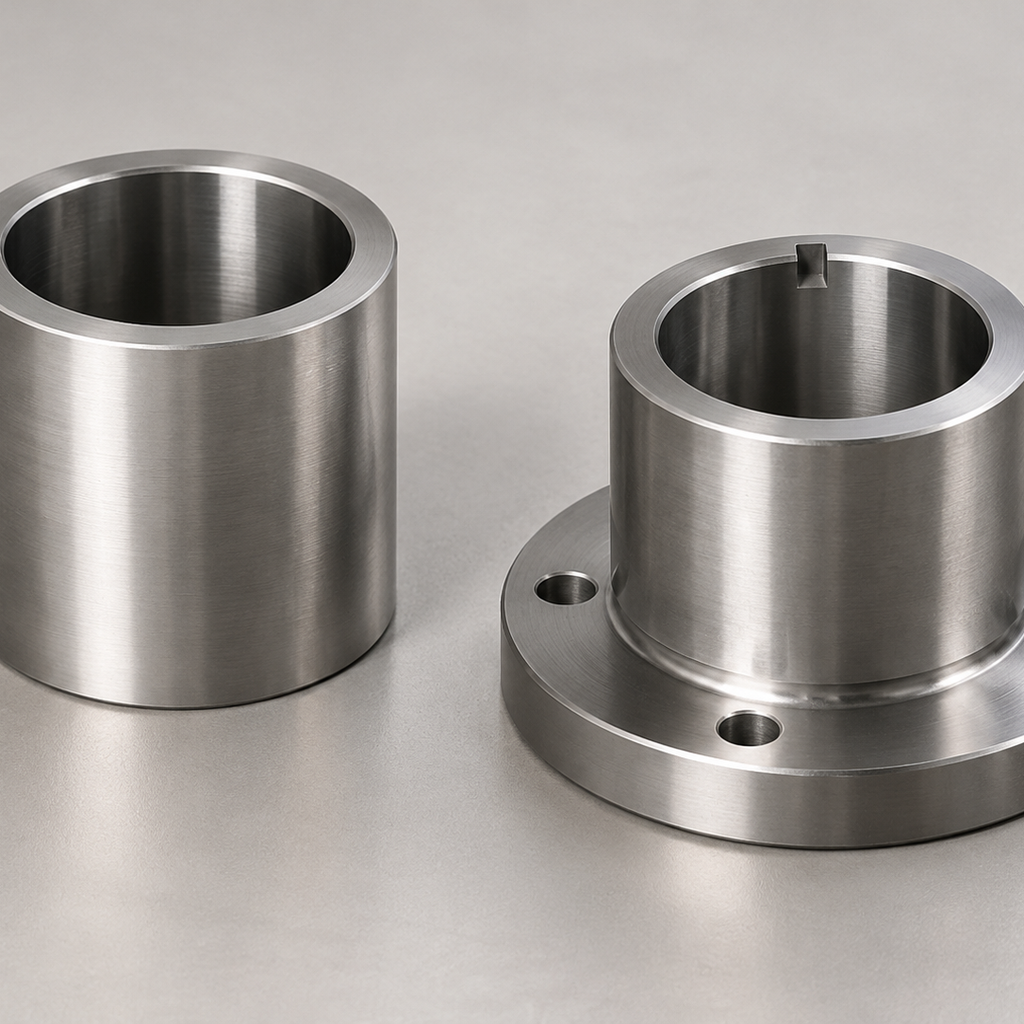
Start with the sleeve’s function: protecting a shaft, guiding a moving component, or lining an abrasive flow passage. Carbide pump sleeves and tungsten carbide bushings experience different contact loads, lubrication conditions, and particle exposure even when their dimensions look similar.
- Cemented carbide
- A composite of hard tungsten carbide (WC) particles held in a metallic binder, commonly cobalt or nickel, consolidated by sintering.
- WC grain size
- The characteristic size of the carbide grains in the sintered material, usually expressed in micrometers (µm).
- HRA
- Rockwell A hardness, an indentation measurement used to compare hard materials; it does not directly measure toughness or service life.
For tungsten carbide wear sleeves, identify the mating materials, mounting method, speed, pressure, lubrication, and likely failure mode before selecting a grade.
Practical takeaway: Specify the sleeve as part of its assembly, with both mating interfaces defined.
Comparison Table: Grade Choices for Abrasion and Impact
For abrasive slurry with limited shock, begin with a harder, lower-binder WC-Co grade. Intermittent impact generally requires greater toughness; corrosive fluids require binder compatibility checks before hardness optimization.
| Grade family | Binder, wt.% | WC grain size | Typical hardness | Selection direction |
|---|---|---|---|---|
| Fine WC-Co | 6–8% cobalt | 0.5–1.5 µm | 91–93 HRA | Strong abrasion resistance; assess edge chipping and shock |
| Medium WC-Co | 8–12% cobalt | 1.5–3 µm | 88.5–91.5 HRA | Balanced starting point for mixed wear and moderate impact |
| Coarser, higher-binder WC-Co | 10–15% cobalt | 3–6 µm | 86–90 HRA | Greater toughness potential; assess abrasive wear rate |
| WC-Ni or modified binder | Grade-specific | Grade-specific | Confirm with grade data | Candidate for selected corrosive environments; fluid testing remains necessary |
Hardness ranges overlap because grain distribution, binder chemistry, and processing also matter. Density, meaning mass per unit volume, is commonly about 13.9–15.0 g/cm³ across the illustrated WC-Co families; confirm the selected grade’s acceptance range.
Practical takeaway: Compare actual grade datasheets and failure modes rather than selecting by hardness alone.
WC Grain Size, Binder Content, and Hardness
Finer WC grains and lower cobalt content generally increase hardness, while higher binder content and coarser grains often improve toughness. These trends do not establish an interchangeable grade designation across manufacturers.
The HPGR carbide stud selection guide also discusses abrasion and fracture tradeoffs, although sleeve loading and mounting require separate assessment.
Practical takeaway: Record binder chemistry, binder percentage, grain-size range, and hardness together.
Fluid Chemistry and Corrosion Considerations
Nickel-bonded carbide can offer better resistance than conventional WC-Co in some corrosive fluids, but it is not universally corrosion-proof. Binder attack can release WC grains and accelerate wear even when initial hardness is satisfactory.
Provide fluid composition, pH, chlorides, temperature, cleaning chemicals, and solids loading. Where sleeves operate beside tungsten carbide seal rings, assess material compatibility across both components while keeping their geometric requirements separate.
Practical takeaway: Qualify uncertain chemistry with representative exposure or service trials.
Specify Fits and Geometry Before Setting Tolerances
Define whether each interface slides, locates, or retains the sleeve before assigning carbide sleeve tolerances. A clearance bore may support movement or lubrication; an interference-mounted outside diameter creates contact pressure that depends on the complete assembly.
Review shaft and housing dimensions, material stiffness, wall thickness, temperature, and retention method together. For custom carbide sleeves, custom carbide manufacturing capabilities should be reviewed against the drawing, including access for bore grinding and inspection.
Practical takeaway: Establish the required operating fit first, then allocate tolerances across all mating parts.
Bore, Outside Diameter, Coaxiality, and Surface Finish
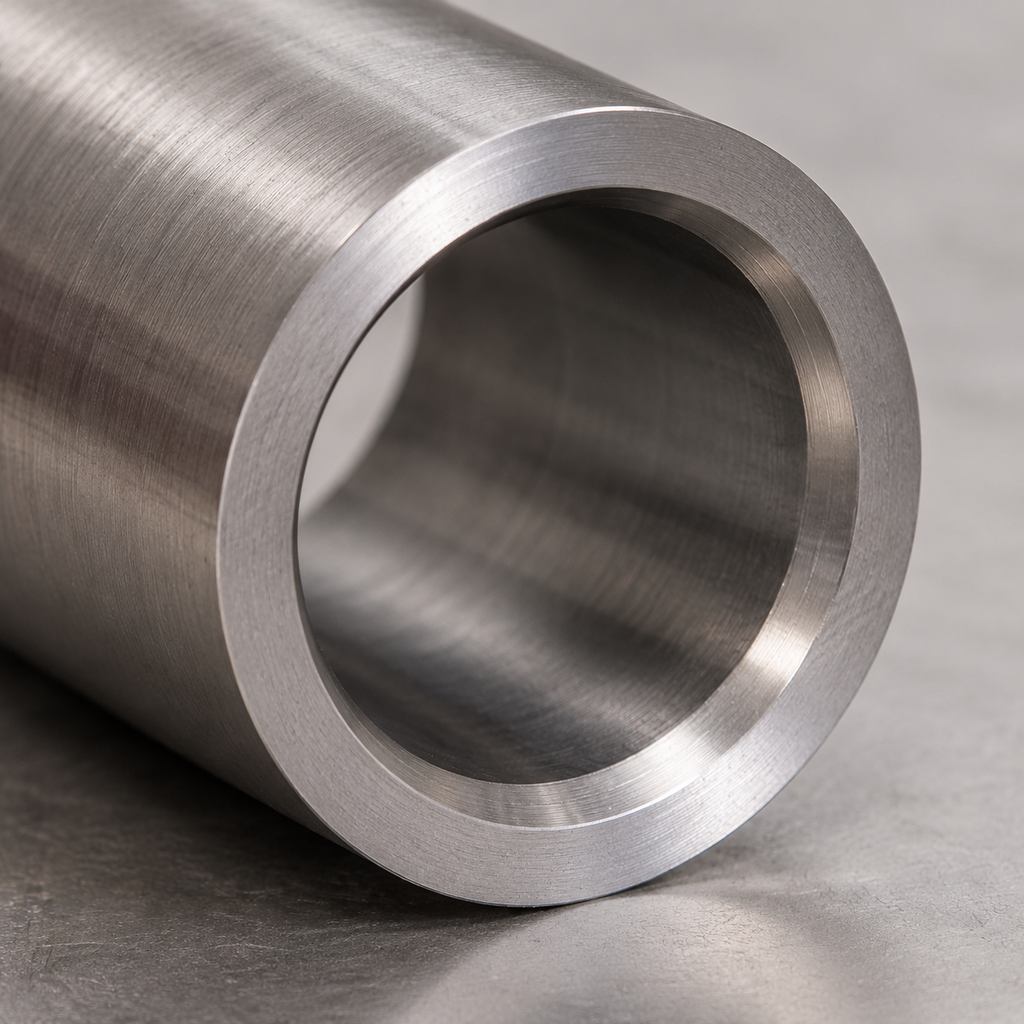
Specify bore and outside diameter independently, then control their relationship using functional datums and an appropriate geometric tolerance. Size limits alone do not control roundness, cylindricity, or axis alignment.
For illustration only, a drawing might specify a Ø25.000–25.010 mm bore, an OD established from the mating housing limits, bore cylindricity of 0.005 mm, and OD total runout of 0.010 mm relative to the bore datum axis. A bore roughness of Ra ≤0.2 µm could be considered for a particular sliding interface; Ra is the arithmetic average roughness, not a measure of roundness.
These values require application and manufacturing review and are not published capability guarantees. State the drawing standard, reference temperature—commonly 20°C—and inspection method.
Practical takeaway: Separate size, form, axis relationship, and roughness requirements.
Wall Thickness, Edge Condition, and Thermal Fit Changes
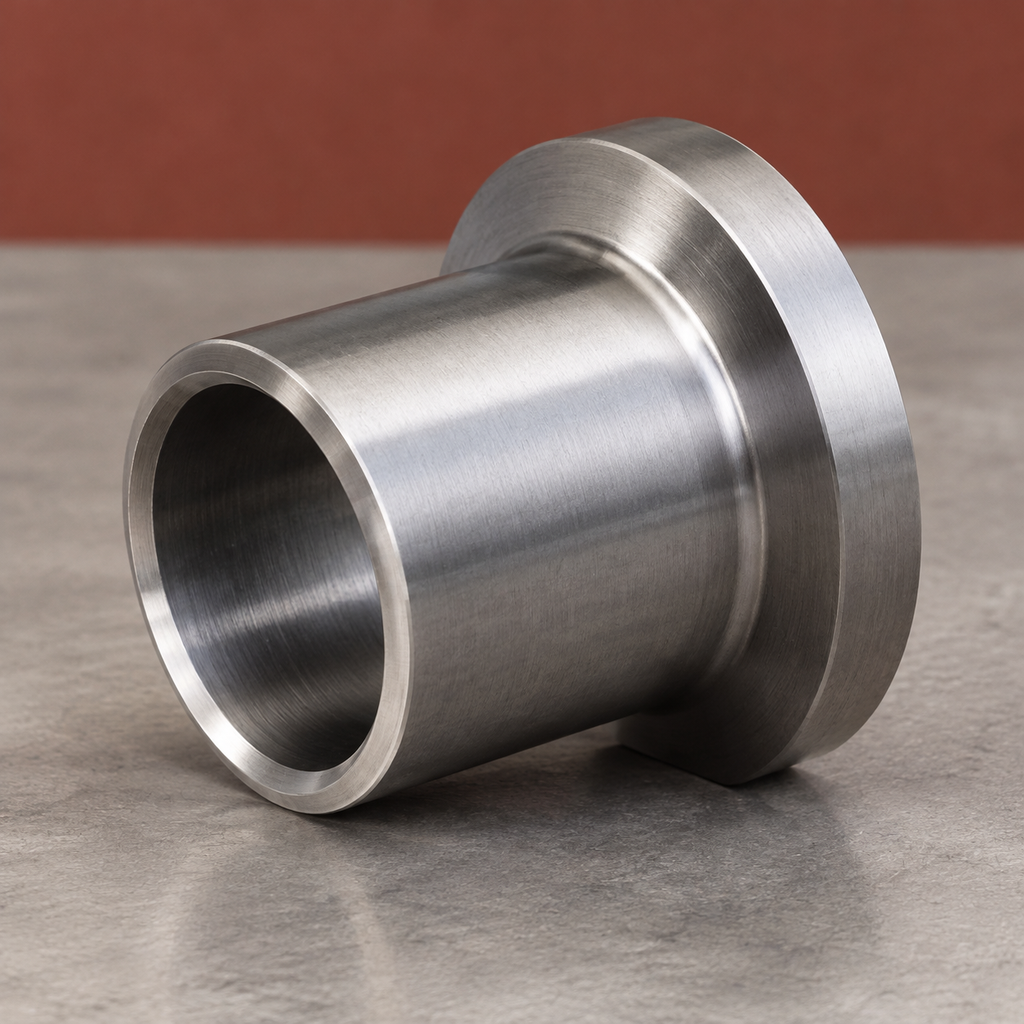
Carbide tolerates compression well but is vulnerable to tensile stress and edge damage. Specify minimum wall thickness, entry chamfers, corner radii, and edge acceptance criteria; avoid forcing a sleeve over misaligned shoulders or sharp transitions.
The coefficient of thermal expansion (CTE) describes dimensional change per degree of temperature change, commonly expressed in ppm/K. Illustratively, using 12 ppm/K for steel and 5.5 ppm/K for carbide, a 50 mm steel housing bore grows about 0.033 mm more than a matching carbide OD over a uniform 100 K rise.
That can reduce outside interference; a steel shaft expanding inside a carbide bore can reduce clearance instead. Actual stresses also depend on restraint, temperature gradients, and contact pressure.
Practical takeaway: Check hot, cold, and assembly conditions before approving interference fits.
Five Steps from Assembly Drawing to Sleeve RFQ
- Describe service: Provide fluid, particles, temperature range, pressure, speed, lubrication, and previous failure evidence.
- Supply assembly information: Include the sleeve drawing, mating-part limits, materials, datums, and retention method.
- Define the grade: State the approved grade or request a recommendation with binder, grain size, hardness, and density data.
- Set acceptance requirements: Identify critical dimensions, geometric tolerances, roughness, edge condition, records, and qualification criteria.
- Define purchasing conditions: Give trial and annual quantities, destination, requested delivery, packaging, and shipping terms.
Minimum order quantity (MOQ) depends on tooling, blank availability, geometry, and setup cost. Lead time depends on grade availability, sintering, grinding, inspection, and order quantity; request separate production and transit estimates.
Practical takeaway: Obtain written confirmation of trial quantity, inspection scope, and delivery before releasing the purchase order.
Specification Summary and Inspection Requirements
Match the supply condition to your finishing and assembly route. The following product specification summary identifies what to resolve during drawing review.
| Configuration | Critical specifications | Inspection emphasis |
|---|---|---|
| Straight, ground sleeve | Bore, OD, length, wall thickness, datums, roughness | Size, cylindricity, runout, edge condition |
| Flanged sleeve | All cylindrical requirements plus flange thickness and shoulder radius | Flange-face perpendicularity or runout to the functional axis |
| Sintered blank with grinding allowance | Grade, allowance on each surface, minimum finished envelope | Blank dimensions, visual condition, batch material records |
Request a batch-linked material certificate identifying the grade and agreed composition information, hardness and density results, plus a dimensional report tied to the drawing revision. Agree whether results are per part or sampled, and how grain size or composition will be documented; routine certificates do not automatically include every laboratory test.
Define measurement locations and suitable methods for deep bores, roundness, runout, and roughness. Confirm record availability through the carbide quality-control process; request any customer-specific certification requirements before ordering.
Key takeaways: Match grade to damage mechanism, validate both mating fits, and make critical features measurable. Release production only after material, geometry, and inspection requirements agree.
Buyer FAQ: Grades, Tolerances, Trial Orders, and Shipping
Use the answers below to close the remaining material, manufacturing, and delivery questions before ordering.
Practical takeaway: A sleeve is ready for procurement when its grade, assembly interfaces, inspection criteria, and shipment protection are documented.
FAQ
Which grade suits abrasive slurry, impact, or corrosive fluids?
For low-impact abrasion, consider finer-grained, lower-binder WC-Co. For intermittent impact, evaluate tougher grades with more binder or coarser grains. For corrosive fluids, assess WC-Ni or modified binders against the actual chemistry and temperature; qualify uncertain service conditions.
What bore, OD, and surface-finish tolerances can I specify?
Specify functional size limits, datums, cylindricity or runout, and roughness separately. Achievable values depend on grade, bore depth, wall thickness, geometry, grinding access, and inspection method. Numerical examples in this guide are drawing-specific illustrations; obtain written capability confirmation.
What determines MOQ and lead time for qualification batches?
MOQ depends on tooling, available blanks, grade, and setup requirements. Lead time includes material preparation or sintering, grinding, inspection, and packaging. Request a quotation for the proposed trial quantity and separate production time from US transit and customs clearance.
Which certificates and inspection records should accompany each batch?
Request batch traceability, a material certificate identifying the grade and agreed composition information, hardness and density results, and a dimensional report referencing the drawing revision. Specify sampling, critical-feature results, and any additional testing or third-party inspection before ordering; confirm availability of required certifications.
How should sleeves be packaged and shipped to the United States?
Require individually separated sleeves, clean nonabrasive bore and ground-surface protection, cushioned edges, and rigid outer packaging that prevents movement. Any bore plugs should avoid wedging or stressing the carbide. Agree moisture protection, package identification, shipping terms, commercial documents, and destination; confirm applicable treatment and marking if solid-wood packaging is used.