01
Micro drills snap easily, forcing machine stops and scrapping expensive circuit panels.
PCB Factory Consumable Control
Built for PCB factories that need fewer broken micro drills, fewer scrapped panels, and more predictable high-speed drilling across.FR-4, HDI, halogen-free, PTFE, IC substrate, and metal-core boards.
Use the popup to share board details, drill list, or sample requirements.
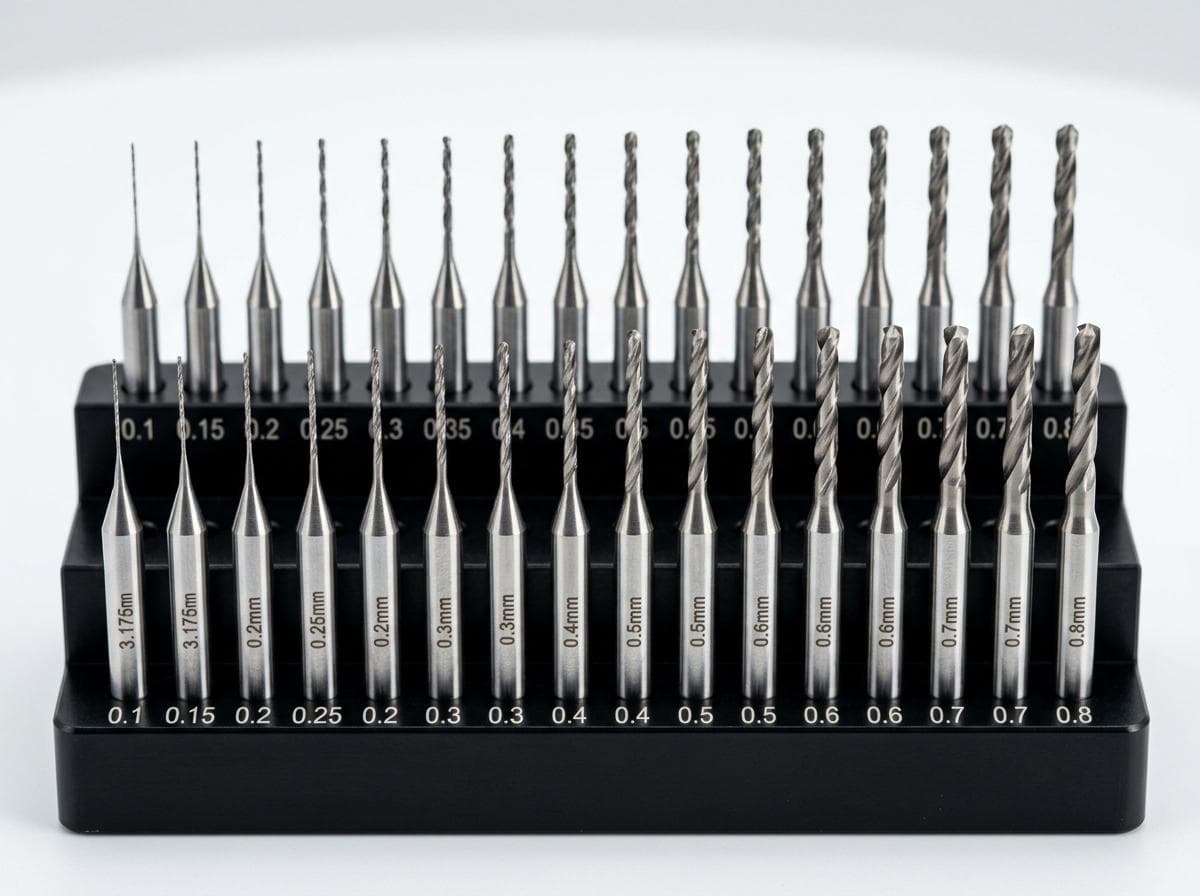
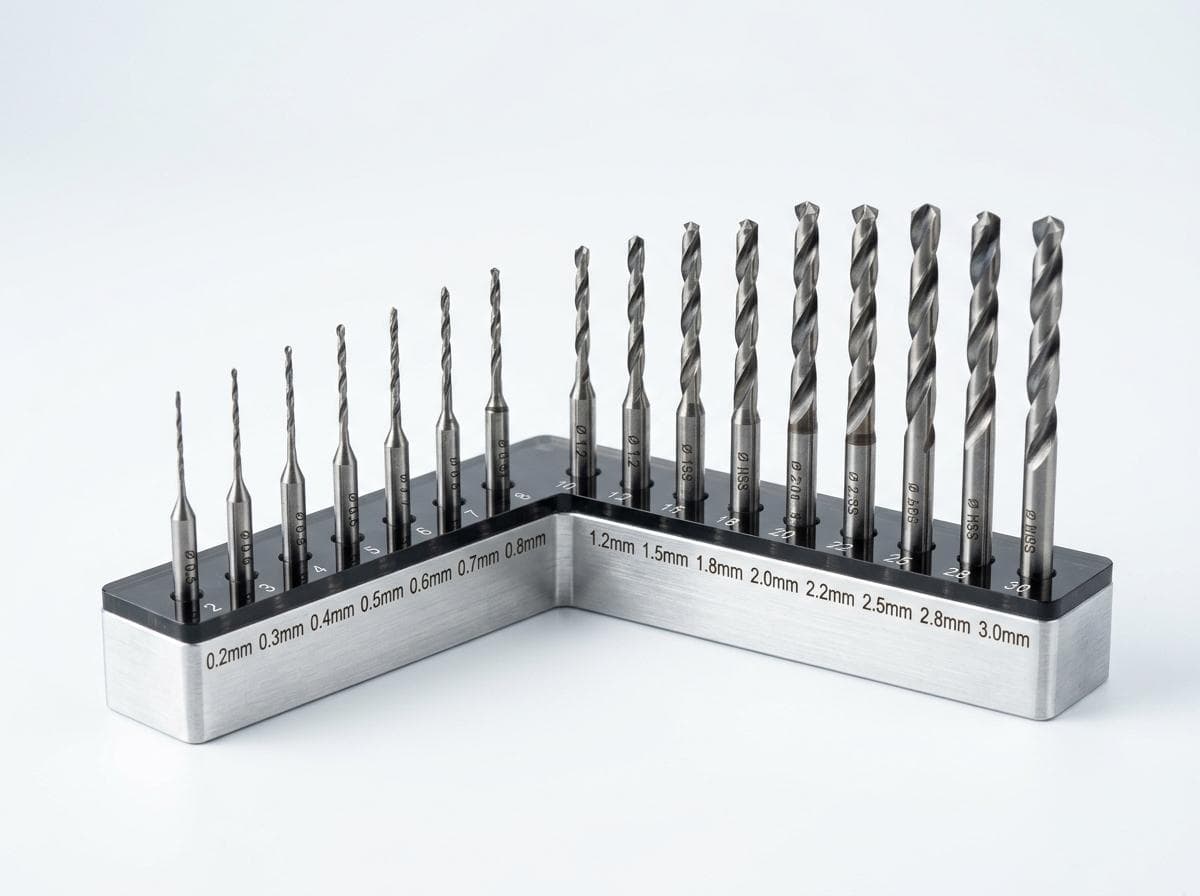
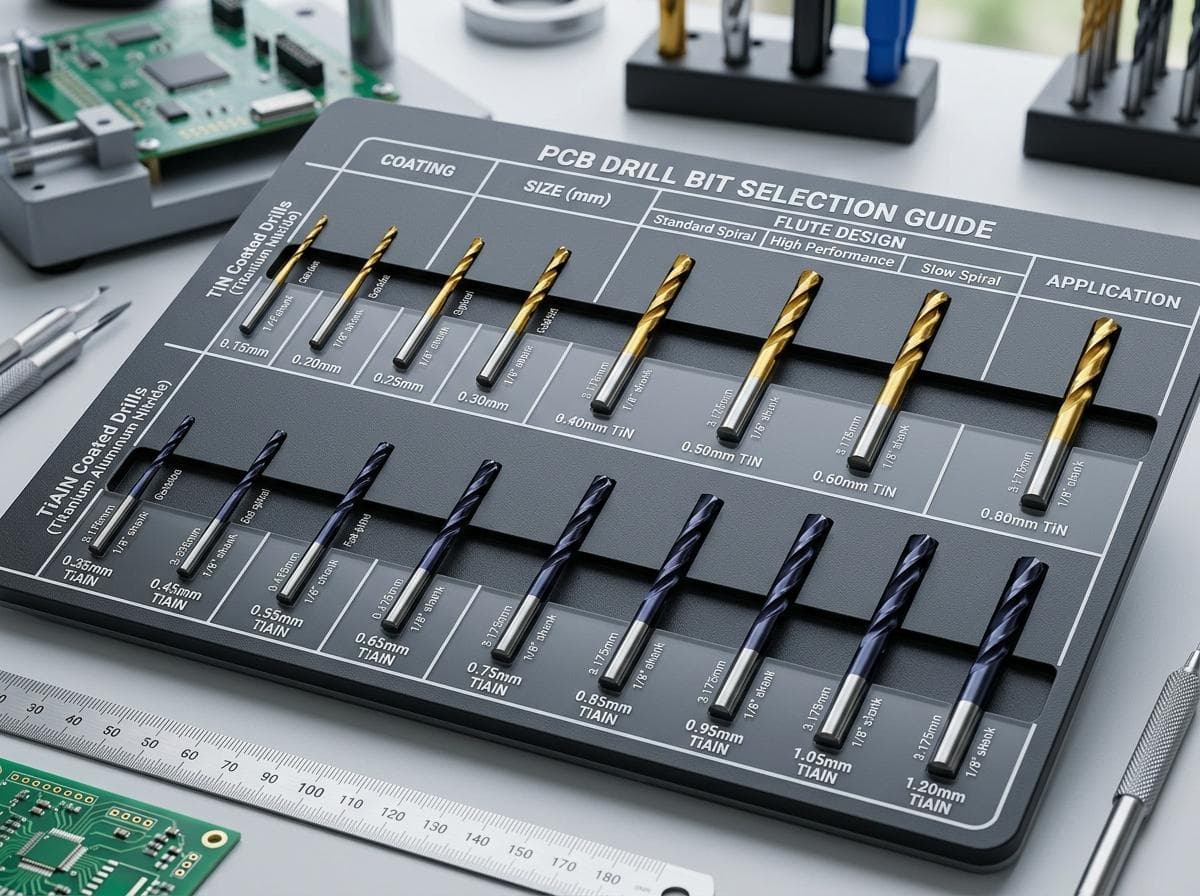
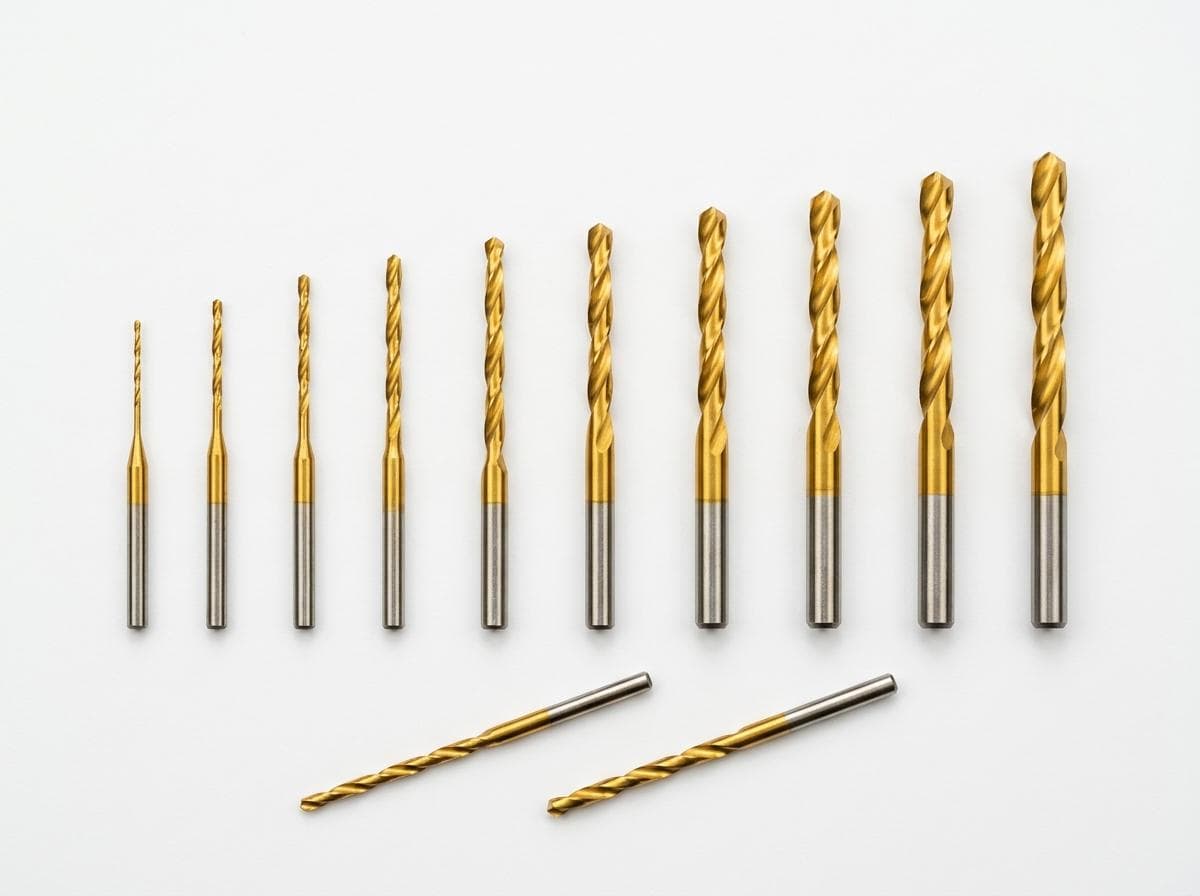
Actual micro drill range
01 / Production Pain
PCB drilling lines do not lose money from drill price alone. The bigger losses usually come from broken tools, stopped machines, scrapped boards, unstable hole quality, and extra rework.
01
Micro drills snap easily, forcing machine stops and scrapping expensive circuit panels.
02
Common drills wear quickly on glass-fiber laminates, creating entry burrs, nail-head defects, and extra rework.
03
Short tool life means frequent replenishment, more tool changes, and higher monthly consumable cost.
04
Generic flute and coating choices can fail on PTFE, high-Tg, halogen-free, and resin-rich boards.
05
Poor concentricity becomes visible at 80,000-350,000 RPM, especially in HDI microvia and IC substrate drilling.
02 / What Changes
Material, coating, geometry, and dimension choices are concentrated here so the page does not repeat the same specifications in every section.
Compared with HSS drills, sub-micron carbide can reach 5-10x service life under standard FR-4 micro-hole production conditions.
Balanced hardness and toughness help reduce micro-drill breakage risk by 40%-65% compared with ordinary coarse-grain carbide in suitable conditions.
A controlled chisel edge and flute design help reduce burr formation and manual deburring pressure.
Uncoated, TiN, TiAlN, and DLC options can be matched to FR-4, high-Tg, halogen-free, PTFE, RF, and resin-rich laminates.
3.175mm shank options and concentricity control support continuous drilling at 80,000-350,000 RPM.
Diameter, flute length, overall length, point angle, coating, and laser marking can be reviewed against your drill list.
03 / Objective Comparison
Reference data below is for standard 1.6mm FR-4 and mainstream 0.15-0.4mm micro-hole production conditions. Use it for material selection, then confirm details with your actual board stack and drill list.
| Comparison Item | Our Sub-Micron Carbide Drill | HSS High Speed Steel Drill | PCD Diamond Drill | Direct Benefit To Your PCB Factory |
|---|---|---|---|---|
| Standard Service Life (0.15-0.4mm micro bits) | 1,200-2,000 holes in standard FR-4 | 120-200 holes | 70,000-120,000 holes in high-abrasion PTFE / ceramic-filled laminates | Carbide lasts 5-10x longer than HSS, reducing frequent machine stops for drill replacement. |
| Glass Fiber Wear Resistance | Good, edges wear evenly and slowly | Poor, edges turn blunt after a small number of holes | Outstanding abrasion resistance for high-filler substrates | Improve daily machine effective production capacity. |
| Minimum Stable Mass-Production Mechanical Drill Size | 0.15mm; 0.08-0.10mm only for custom small-batch samples | >=0.40mm | >=0.18mm; unstable mass production below 0.18mm | 0.15mm+ microvias can be processed stably for regular HDI boards. |
| Breakage Risk for Bits Under 0.4mm | Low, balanced hardness and toughness | Extremely high; thin shanks crack easily | Brittle, tip chips under minor impact | Lower direct costs caused by broken drills and wasted circuit panels. |
| Hole Surface Finish After Drilling | Smooth with minimal burrs | Severe copper nail-head burrs requiring extra post-processing | Mirror-smooth hole interiors without resin residue | Shorten post-production processing cycle and labor cost. |
| Comprehensive Long-Term Drilling Cost | Medium-low, suitable for most mass production lines | Low unit price but high recurring replacement cost | High single-piece price, only cost-effective for special high-abrasion laminates | Best cost-performance choice for regular FR-4 and HDI mass production. |
| Compatible Circuit Board Types | FR-4, HDI, halogen-free, metal core, and small-volume high-frequency boards | Only low-volume FR-4 prototype trial runs | PTFE, ceramic-filled M8/M9 RF high-frequency substrates | One carbide drill series covers over 90% of mainstream PCB manufacturing demands. |
Low upfront cost but poor wear resistance; only fit small-batch prototype drilling, not recommended for mass production.
Extraordinary service life but high unit price and brittleness; suitable for continuous high-abrasion PTFE or ceramic-filled boards.
Balanced toughness, wear resistance, and total cost; the universal choice for consumer electronics, automotive, and communication PCB mass manufacturers.
04 / Engineer Lookup
Use this table for engineering screening. Final recommendations depend on the board material, hole diameter, flute length, machine condition, coating target, and monthly usage.
| Parameter | Standard Parameter | Custom Option |
|---|---|---|
| Raw material | Sub-micron WC-Co tungsten carbide | Ultra-fine grain carbide can be reviewed by requirement |
| Diameter range | 0.15mm-6.50mm stable mass-production range | 0.08-0.10mm only for small-batch custom samples |
| Standard shank | 3.175mm industry standard 1/8 inch | Special shank diameter by equipment requirement |
| Point angle | 130-140 degrees balanced drilling angle | 110 / 120 / 150 degrees by requirement |
| Spindle speed fit | 80000-350000 RPM | Flute geometry can be reviewed for low or ultra-high speed machines |
| Coating options | Uncoated / TiN / TiAlN / DLC | Anti-sticking or wear-resistant coating by material target |
| Board materials | FR-4, high-Tg, halogen-free, HDI, IC substrate, metal core | Ceramic-filled and high-frequency boards by custom flute review |
| Dimensional tolerance | +/-0.002mm typical | +/-0.001mm can be reviewed for high-end IC boards |
05 / Material Match
The same diameter can perform very differently on FR-4, high-Tg, PTFE, and metal-core boards. Coating and flute selection should follow the board material and the production problem you want to solve.
Small-batch FR-4 prototype production where upfront cost matters more than maximum life.
Standard FR-4 mass manufacturing with balanced wear resistance and daily bulk-production cost.
High-Tg and halogen-free laminates where long continuous high-speed drilling can dull edges.
PTFE, RF high-frequency, and resin-rich substrates where low friction helps reduce resin smearing and keeps hole walls cleaner.
Smooth chip removal for general multi-layer FR-4 mass drilling.
Helps protect thin and delicate HDI circuit boards from hole-wall scratching.
Recommended for micro drills >=0.15mm to reduce entry burr formation.
06 / Applications
Designed for PCB factories drilling standard and demanding board stacks across consumer electronics, automotive control boards, medical precision substrates, aerospace high-frequency modules, and 5G communication boards.
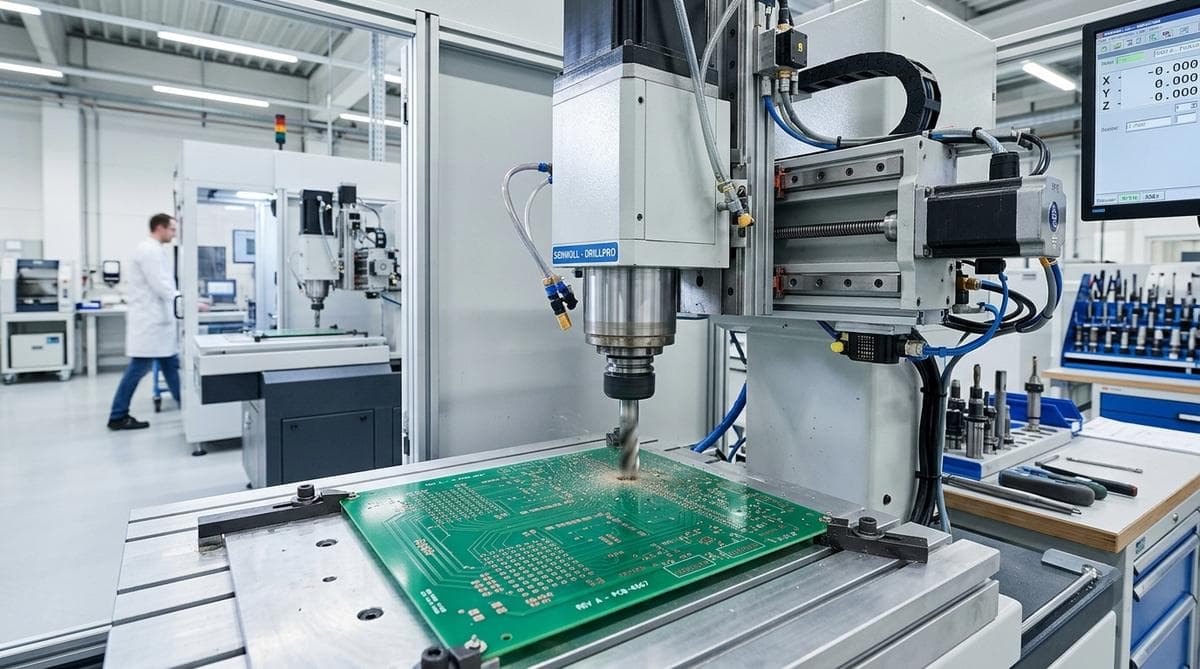
Standard through holes and vias in everyday PCB mass production.
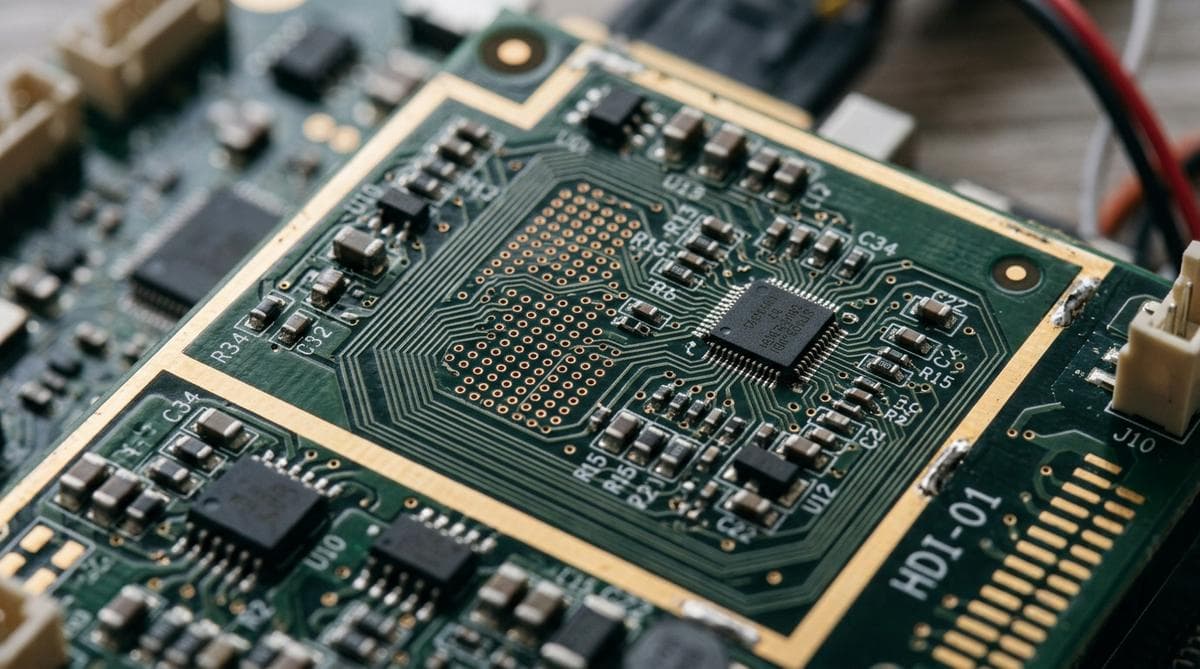
0.15mm+ micro blind and buried holes where breakage control matters.
High-frequency materials, ceramic-filled laminates, and resin-rich substrates.
Automotive power modules and composite stacks requiring stable chip evacuation.
07 / Trust Proof
Quality proof for PCB drills should focus on repeatable production, full inspection, report availability, drawing confidentiality, and export packing discipline.
Hard Proof for Buyers
Procurement details we can confirm before order include factory workflow, inspection records, material report sample, MOQ and lead time, export packing, and drawing confidentiality.
01
Sub-micron carbide substrate route is confirmed before grinding.
02
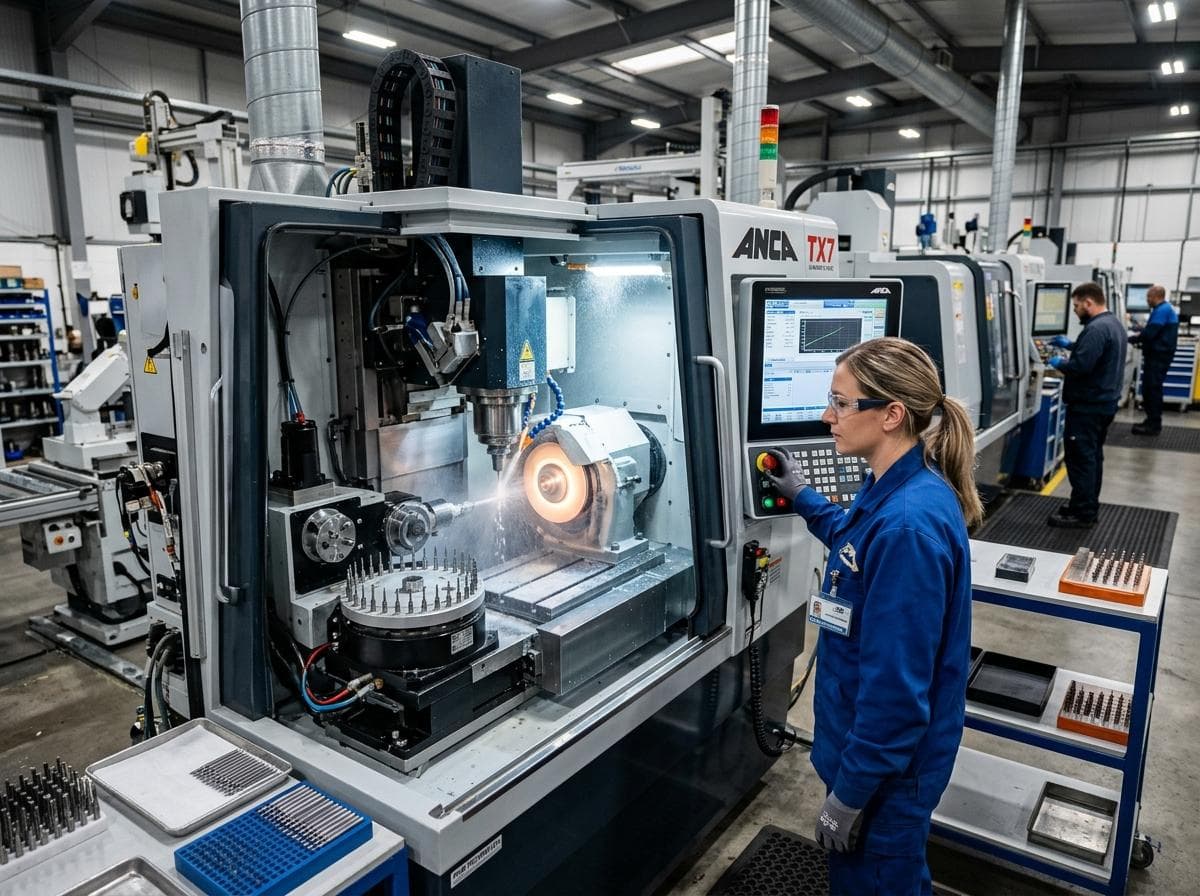
Diameter, flute, point angle, and edge condition are formed by precision grinding.
03
Uncoated, TiN, TiAlN, or DLC route is selected by board material and life target.
04
Diameter, concentricity, point angle, and cutting edge are checked before release.
05
Anti-collision trays, moisture protection, size labels, and export cartons reduce shipment damage.
Each batch can be checked for diameter, concentricity, point angle, and cutting-edge condition.
Material certificate and batch dimensional inspection records are available by order agreement.
Custom drawings and process information can be protected under NDA available on request.
Anti-collision trays, size labels, and protective cartons support international shipping.
08 / Buyer Terms
Samples, lead time, MOQ, packing, and trade terms are centralized here so buyers can qualify the project without searching through repeated contact text.
Small-batch sample trial support is available for qualified drill lists and board materials.
Stock or standard sizes are normally quoted around 5-7 working days after requirement confirmation.
Custom geometry, special micro sizes, or coating routes are normally quoted around 10-18 working days.
Confirmed by diameter mix, coating, production route, and whether the order is sample trial or repeat supply.
Independent anti-collision tray inner packing plus moisture-resistant and shock-resistant export cartons.
EXW, FOB, CIF, or express delivery terms can be confirmed according to destination and order size.
09 / RFQ Input
Send these details together to reduce back-and-forth and receive a more accurate drill recommendation and quotation.
Diameter list or engineering drawing
Overall length and flute length
Board material: FR-4, HDI, PTFE, metal core, high-Tg, or halogen-free
Preferred coating type
Monthly or annual purchase quantity
Machine spindle speed and current production problem
Laser marking, special packaging, or extra inspection report needs
10 / Buyer Questions
Answers for PCB factories evaluating micro drill suppliers, sample testing, coatings, minimum size, inspection, and quotation inputs.
0.15mm is the stable mass-production minimum for mechanical carbide PCB drills. 0.08mm and 0.10mm are only recommended for small-batch custom samples, not continuous mass production.
DLC coating is usually preferred because low friction helps reduce resin smearing and supports cleaner hole walls on PTFE, RF, and resin-rich substrates.
Yes. Sample trial support is available when the drill list, quantity, board material, and test target are clear.
In suitable applications, sub-micron fine-grain carbide and concentricity control can reduce micro-drill breakage risk by 40%-65% compared with ordinary coarse-grain carbide.
Batch dimensional and optical inspection records can be provided by order agreement, including diameter, concentricity, point angle, and cutting-edge checks.
Send the diameter list, flute and overall length, board material, coating preference, quantity, spindle speed, and the production problem you want to improve.
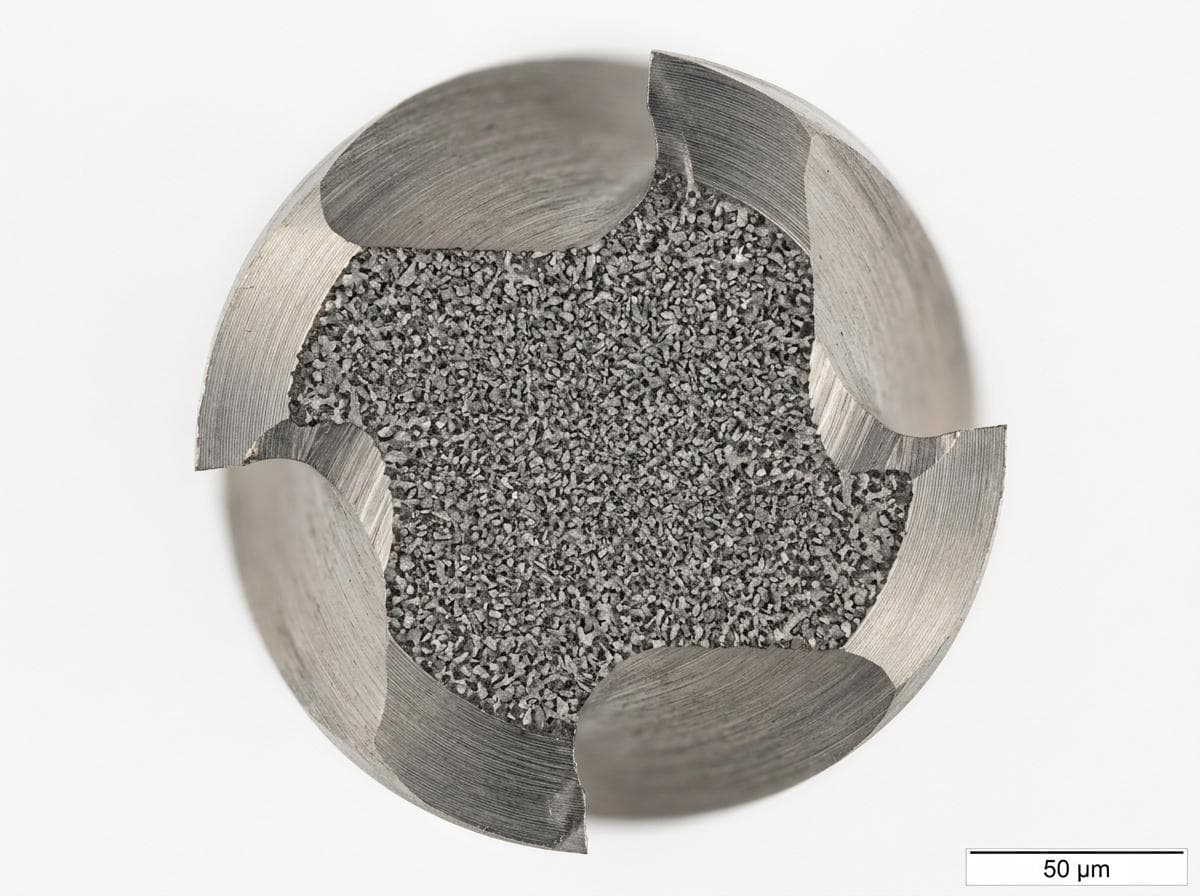
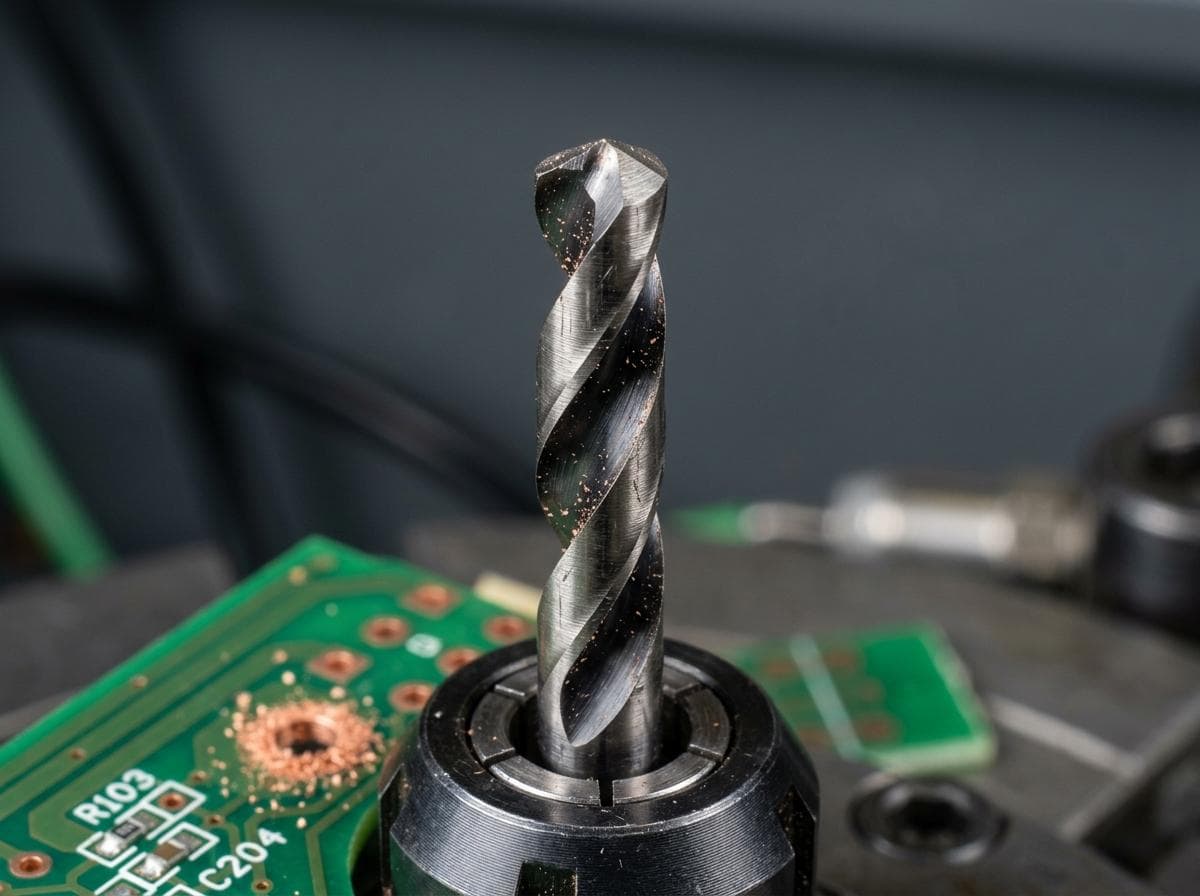
Actual Product Views
11 / Bottom Inquiry Form
Upload your hole-size list, drawing, board material, and production target. Our technical team will match the drill diameter, coating, flute geometry, sample route, and quotation details.
Related Products
See the full range on the all products page.