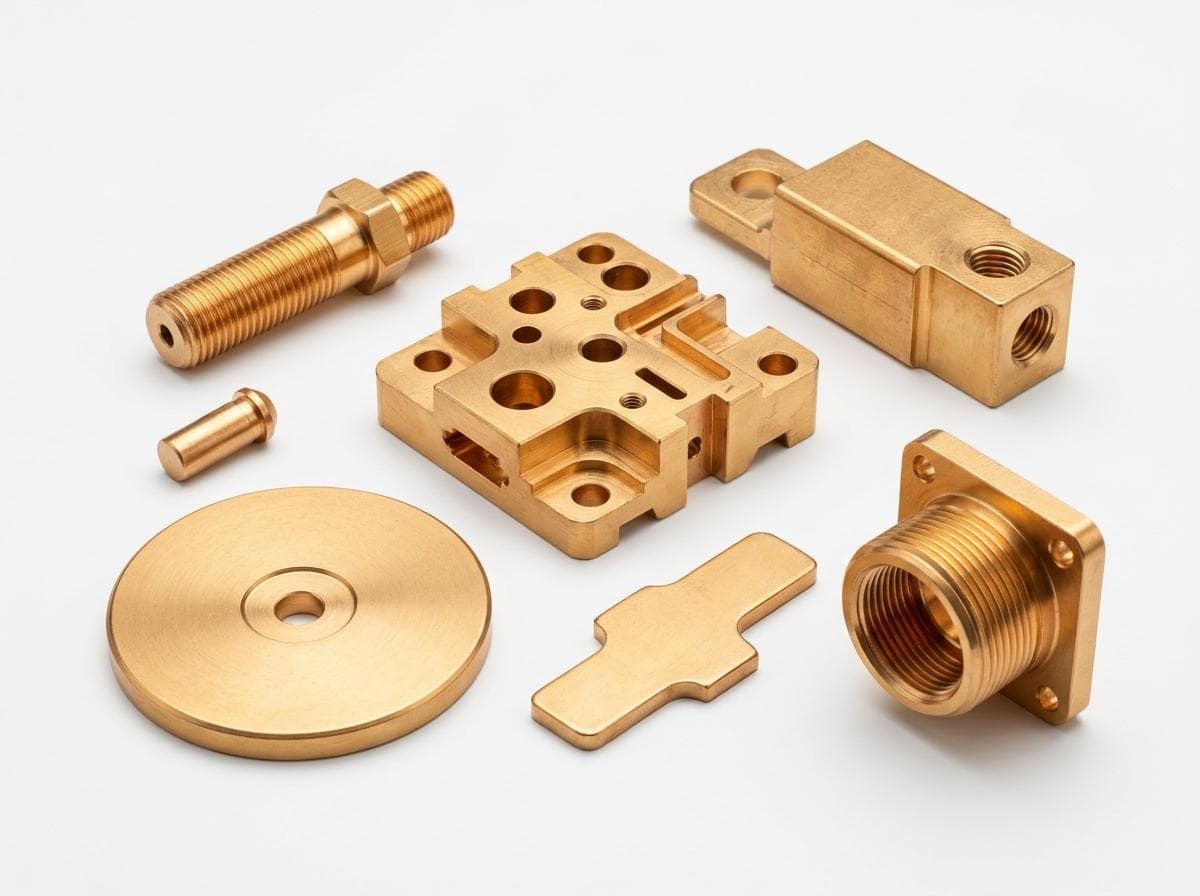
Tungsten Copper Alloy: Properties, Grades, and Heat-Sink Applications
How WCu alloy composition controls thermal conductivity and expansion matching, and where W80Cu20-style grades fit heat sinks, contacts, and packaging.
Why tungsten and copper are combined
Tungsten copper (WCu) is a composite of two metals that do not alloy: a tungsten skeleton infiltrated with copper. The result inherits tungsten density, low thermal expansion, and high temperature strength, together with copper conductivity and arc resistance.
By shifting the tungsten-copper ratio, the properties move predictably between conductivity and expansion control — which is why WCu is specified wherever heat must move but dimensions must stay stable.
Common grades and what they optimize
Grades are named by weight ratio. W90Cu10 minimizes thermal expansion for the most expansion-critical packaging; W70Cu30 maximizes conductivity within the family. Common engineering grades include:
- W90Cu10 / W88Cu12: lowest CTE, used adjacent to ceramics and semiconductors
- W80Cu20 / W75Cu25: balanced CTE and conductivity for flanges, bases, and spreaders
- W70Cu30 and copper-richer: highest thermal conductivity for heat-sink duty
Application notes by industry
In electronic packaging, WCu bases and lids carry heat out of RF devices and power modules while matching the expansion of ceramic and semiconductor neighbors. In electrical contacts, the alloy resists arc erosion under repeated switching. In EDM, tungsten copper electrodes hold detail where copper alone erodes too quickly.
Machinability is workable but different from pure copper: carbide tooling, controlled feeds, and realistic tolerance expectations should be part of the drawing review.
Specifying WCu in an RFQ
The fastest route to an accurate quotation is to fix the grade ratio, form, and finish together:
- Grade ratio (e.g., W80Cu20) with density reference value
- Form: plate, rod, block, or machined part drawing
- Critical dimensions, flatness, and surface finish requirements
- Any plating (Ni, Au) or joining process downstream
Summary
Choose the grade ratio by deciding whether expansion matching or conductivity dominates the application, then specify density and geometry. WCu rewards buyers who define the joining and finishing route early.